


How Technology Can Help Deliver Patient-Centered Care in Nephrology
Kidney disease is skyrocketing in the U.S. today: More than one in seven U.S. adults — ...
May 27, 2026
According to the 2025 Renal Physicians Association (RPA) Annual Meeting, the state of nephrology is defined by an urgent need for “adaptability and innovation” to ensure practice sustainability amid financial pressure.
But as a nephrologist, you know this all too well.
You are juggling high-acuity patients, frequent clinic visits, and complex documentation. Add lab-heavy workflows and constant care coordination across multiple settings, and the daily workload doubles, even triples.
You want to focus on treating your patients. Instead, you often find yourself buried under a mountain of paperwork and administrative tasks. These challenges require true innovation and adaptability, as the RPA Annual Meeting highlights.
Specialty-focused electronic health record (EHR) and practice management tools meet this need by offering advanced solutions. These systems support efficient workflows without detracting from patient care, making them an ideal fit for the demanding environment of a nephrology practice.
This article explains the unique challenges faced by today’s nephrology practices and examines the impact of administrative burden on patient care. We also discuss how leveraging nephrology-specific EHRs and practice management solutions can streamline workflows, enhance care coordination, and improve patient engagement.

Nephrology practices manage high-acuity patients who require frequent, specialized care. Consider a 67-year-old patient with Stage 4 chronic kidney disease, uncontrolled hypertension, and Type 2 diabetes.
Managing this patient’s care isn’t a quick annual checkup. You’re constantly monitoring their declining kidney function, adjusting complex medication regimens, and coordinating with her primary care provider and endocrinologist.
Complex documentation and lab-heavy workflows are also integral to effectively managing conditions like the one above. Nephrologists rely heavily on continuous data. You need to track trends in eGFR, potassium, calcium, and phosphorus levels to make critical, timely clinical decisions.
Managing this extensive data manually or with a generic system often leads to disorganized charts and missed clinical insights, increasing the likelihood of errors. Here’s how:
Real-world example: An article on EHR challenges in managing heart failure and chronic kidney disease highlighted that inaccurate or incomplete data in legacy systems often lead to errors, such as faulty medication reconciliation. These issues can trigger false alerts, leading providers to duplicate or increase medication dosages and risking patient harm.
Administrative tasks can severely detract from the time and quality of your patient interactions. When you spend your day typing notes, tracking missing lab results, or fighting with billing codes, you have less energy to dedicate to your patients. This shifts your focus away from clinical care and damages the provider-patient relationship.
High administrative loads also lead directly to burnout among healthcare providers. Long hours spent on data entry and care coordination paperwork drain your energy and decrease your job satisfaction.
“Approximately 23% to 50% of nephrologists experience burnout, driven by high-intensity workloads, extensive EHR requirements, and the complex, chronic nature of patient care,” according to Kidney Medicine.
In the end, this exhaustion affects your overall practice efficiency, slowing down throughput, and increasing the likelihood of clinical errors.
For instance, burnout can threaten patient care quality and safety when depersonalization leads to poor interactions with patients and when burned-out providers suffer from impaired memory, attention, and executive function, noted by the Agency for Healthcare Research and Quality (AHRQ).
Using an EHR for nephrologists can streamline documentation and significantly reduce errors. Unlike generic systems, a nephrology EHR features templates and workflows tailored to the exact data points you need. This saves you clicks and ensures your notes are accurate and comprehensive.
These tools also integrate seamlessly with lab workflows, improving data management, and patient care coordination. This integration matters deeply to nephrology practices because your treatment plans depend on lab results.
When an EHR pulls bi-directional lab feeds directly into the patient’s chart, you can spot critical trends immediately. For example, if a patient’s hemoglobin drops, an integrated system can automatically alert you. You can then adjust their anemia management protocol instantly, rather than waiting days for a paper fax to cross your desk.

Effective nephrology practice management software can automate your scheduling and billing processes, reducing your staff’s manual workload. Here’s how:
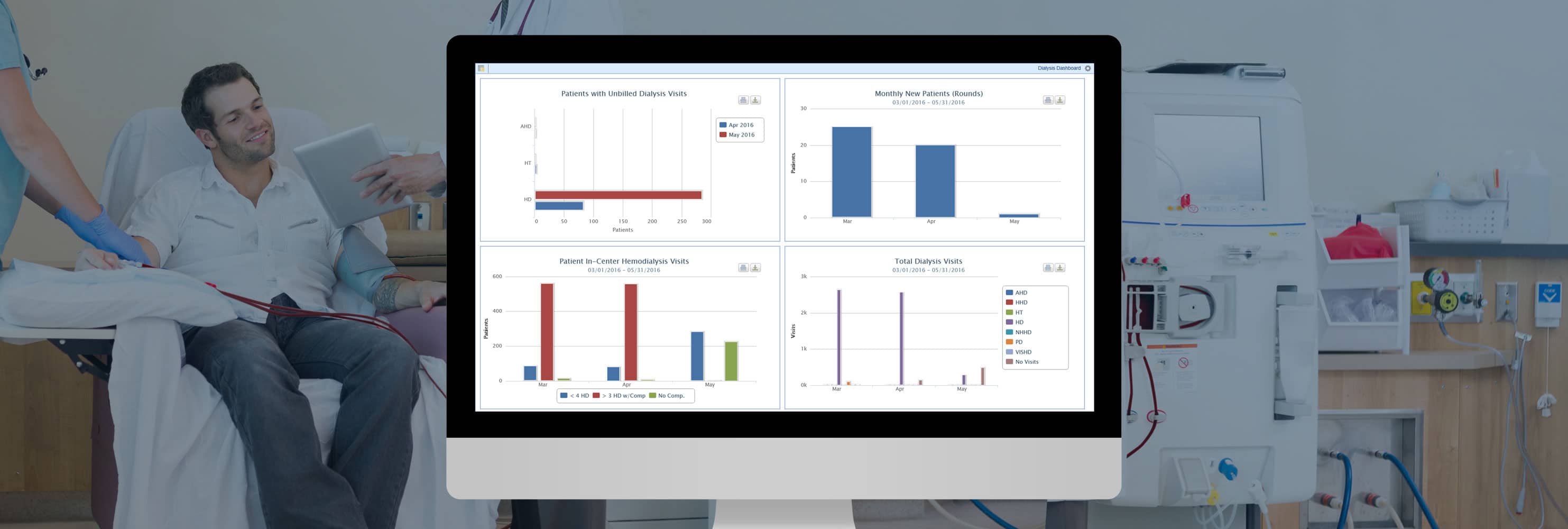
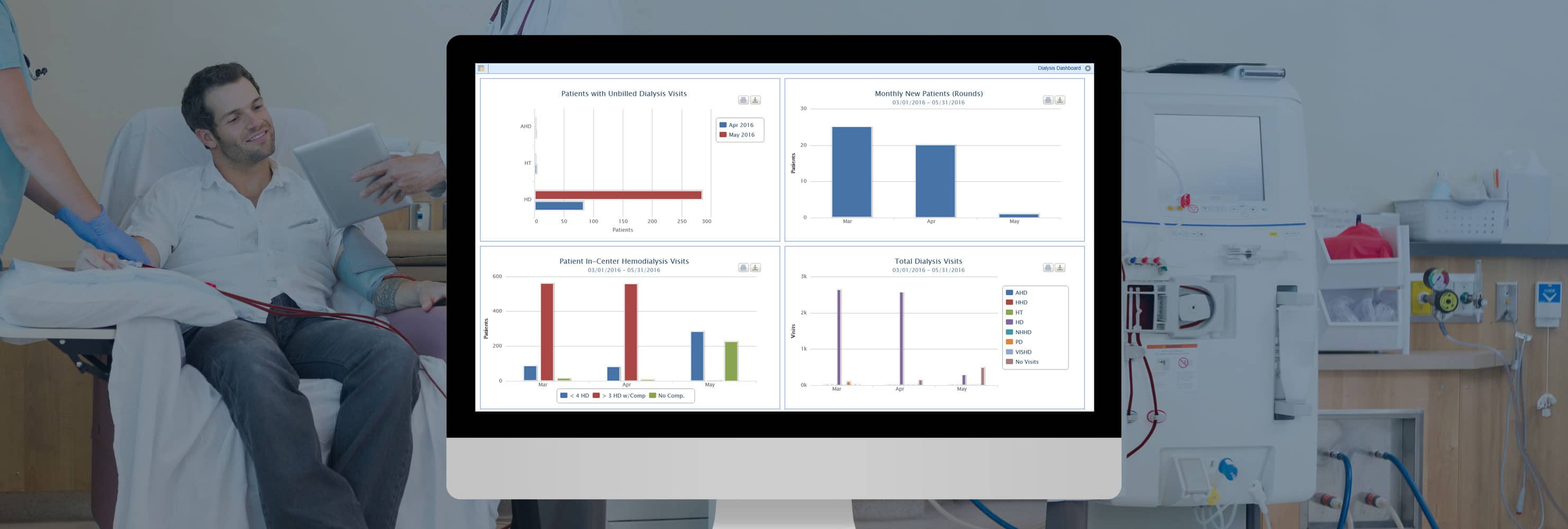
For example, a specialized dashboard can quickly identify patients who have met the critical 4-visit threshold for dialysis within a given month. I
Instead of having your billing staff manually count visits across different dialysis centers, the software automatically flags these patients. This ensures you capture the appropriate revenue without wasting hours on chart audits.
Effective kidney care coordination requires a bold approach and the right technology to improve patient outcomes. Here are key strategies to consider.
If a dialysis nurse notices a catheter infection, they can send a secure message directly to your mobile device. You can issue treatment orders immediately, avoiding a costly emergency room visit for the patient.
You can also assess their access site and review their recent home logs virtually, ensuring they stay on track with their treatment plan without forcing them to make a difficult trip to the clinic.
RELATED CONTENT: Streamlining Clinical Workflows with AI-Enhanced EHRs
Adopting the right nephrology-specific EHR and practice management software can transform your practice from a stressed, paper-heavy office into a highly efficient clinic. When your tools actually understand kidney care workflows, you can reclaim hours of your day.
A perfect example is NephroChoice by iSalus. This platform is a cloud-based, fully integrated nephrology EHR, practice management, medical billing, and telehealth solution. Recognized as the Top-Ranked Nephrology EHR in 2025, it offers the exact tools you need to thrive.
Here are seven key features of the Nephrology EHR that help reduce administrative burden, streamline workflows, and improve patient care:

By embracing cloud-based nephrology EHR systems, you can eliminate operational bottlenecks and focus entirely on clinical outcomes. From managing complex lab data to automatically tracking dialysis visits, the best nephrology EHR will support your team at every step.
An excerpt from an article titled Promoting Independent Advanced Practice Nephrology Care sums up the overarching futuristic view of today’s nephrologists,
“Our goals cannot be achieved without a team approach, without broadening our view, and without using a more contemporary approach of independent nephrology advanced practice. It is time to bury old practice patterns and embrace a bold new opportunity to advance kidney care.”
Ready to embrace a new future? Want to simplify the unique practice management challenges of your nephrology practice, without detracting from patient care?
Contact iSalus today to discover how a nephrology-specific EHR can reduce administrative burden, streamline workflows, and improve patient care – all in one platform!
General EHRs require extensive customization to handle the specific data points of kidney care. A specialty-specific system comes pre-loaded with nephrology templates, dialysis workflows, and lab integrations, saving you time and reducing documentation fatigue right from day one.
Yes, an integrated patient portal reduced front desk workload. When patients use a portal to complete intake forms, update demographics, and request prescription refills online, your front office staff spends significantly less time on the phone and less time manually entering data into the system.
Because nephrology relies on precise, ongoing lab values, an integrated system pulls results directly into flowsheets. This allows you to spot trends in kidney function or electrolytes instantly, enabling faster, safer clinical decisions.
Absolutely. Telehealth is incredibly useful for home dialysis check-ins, routine lab reviews, and follow-ups. It improves care coordination and patient compliance, especially for those who struggle with mobility or transportation issues.
Kidney disease is skyrocketing in the U.S. today: More than one in seven U.S. adults — ...
Your organization needs a Nephrology EHR that has advanced and specialized tools. Nephr...
2021 is here and your Nephrology practice needs a Nephrology EHR with advanced dialysis...