


Improve Patient Engagement and Office Productivity with a Single Unified Communications Platform
The EverHealth team had the distinct honor of presenting at the Healthcare Information ...
March 18, 2026
Imagine a new patient walks into your specialty practice. They are in pain, anxious, and hoping for answers. They mention a recent MRI done at a hospital across town and a blood panel from their primary care physician. You open your electronic health record (EHR), ready to review these critical findings, but the screen is blank.
The records aren’t there.
Now, your front desk staff has to spend valuable time calling other offices, waiting on hold, and asking for faxes. Meanwhile, you are left making clinical decisions with incomplete information.
This is the reality of fragmented data. Patient records are scattered across hospitals, specialists, labs, and disparate vendor systems, creating silos that slow down care.
The solution to this problem? Interoperability in healthcare. Specifically, modern integration tools like iSalus’ RecordSync offer a practical way to unlock these records. By bridging the gap between systems, you can stop chasing paper and start seeing the full picture of your patient’s health.
This article explores how fragmented records hurt your operational workflows, the vital role of health information exchange (HIE), and how tools like RecordSync improve care coordination and practice efficiency.
Key Takeaways

Simply put, interoperability in healthcare is the ability of different information systems, devices, and applications (systems) to access, exchange, integrate, and cooperatively use data in a coordinated manner.
It’s not just about moving data from point A to point B; it’s about ensuring that when the data arrives at point B, it can be understood and used without extra effort.
To understand this better, it helps to look at the four levels of interoperability:
Why do the different types of interoperability matter for your daily clinical decisions? Because EHR interoperability is the difference between having a static PDF attached to a chart and having discrete data—like allergies or medication lists—automatically populate the correct fields in your EHR.
It distinguishes true interoperability from basic EHR integration, ensuring seamless patient record access and actionable data.

RELATED CONTENT: Understanding the Different Types of Interoperability in Healthcare
Every patient interaction is an opportunity to build—or lose—trust. When patient data lives in silos, the real cost is measured in wasted time and compromised care. The World Economic Forum describes these silos as a fractured landscape of vital health information, limiting a comprehensive understanding of patient health and journeys.
Comprehensive health data exchange isn’t just a technical requirement; it’s a necessity in patient safety and confidence. Without it, the consequences of fragmentation are very real:
Picture this: a patient arrives at an appointment with a history of kidney stones treated at an ER two counties away. Without access to the CT scan or discharge summary from that visit, decisions are made based on guesswork rather than essential data. This could lead to ordering a new scan, unnecessarily exposing the patient to additional radiation and costs.
In a pain management clinic, a similar challenge arises. A patient consults multiple providers for chronic back pain. Without proper care coordination supported by interoperability, there’s no way to know if the patient recently received a prescription for opioids from another provider. This gap in information creates a significant safety risk that could otherwise be avoided.
To address these silos, the healthcare industry relies on health information exchange (HIE) infrastructure. Think of HIE as the “plumbing” that connects the water mains (hospitals/labs) to your house (your practice).
Several key components make this work:
When these networks connect, they often exchange a standard document called a Continuity of Care Document (CCD). A CCD is a snapshot of the patient’s health. It typically includes allergies, medications, problem lists, and recent results.
For a practice, connecting to these HIE networks means no longer needing to build individual interfaces with every local hospital. Instead, you plug into the network, and the network connects you to everyone else.

RELATED CONTENT: Streamlining Clinical Workflows with AI-Enhanced EHRs
Understanding the theory of interoperability is one thing, but how does it work in practice? This is where tools like iSalus’ RecordSync come into play.
iSalus has partnered with Surescripts to integrate their Record Locator & Exchange (RLE) tool natively into the all-in-one iSalus EHR. This powerful integration, known as RecordSync, is a prime example of healthcare interoperability in action.
Here is how RecordSync transforms the workflow:
This interoperability significantly improves care coordination and care transitions. For example, when a patient transitions from hospital discharge back to your clinic, RecordSync lets you pull the discharge summary immediately.
You can reconcile their hospital meds with their home meds in seconds. This ensures you have a “single source of truth” without leaving the chart. Providers spend less time searching for records and more time caring for their patients, while staff are relieved of the burden of manual faxing and phone calls.
If you are evaluating your current system or looking for a new one, you need to ensure it supports modern electronic medical record integration.
Here is a practical checklist of what to look for:
iSalus checks these boxes with tools like RecordSync, ensuring that your practice isn’t an island. By choosing a solution that prioritizes connectivity, you are investing in efficiency and better patient outcomes.
Want to learn more about how to promote better EHR interoperability and get a more complete patient picture in your clinic? Contact iSalus to discover how the RecordSync tool can enhance your practice’s efficiency, improve patient care, and be an extension of your care team.
Interoperability in healthcare is the ability of different healthcare information systems and software applications to communicate, exchange data, and use the exchanged information. It ensures that patient health information is available when and where it is needed.
Health information exchange (HIE) refers to the mobilization of healthcare information electronically across organizations within a region, community, or hospital system. It allows doctors, nurses, pharmacists, and other health care providers to securely access and share a patient’s vital medical information.
Interoperability ensures that every provider involved in a patient’s care has access to the same accurate, up-to-date information. This reduces medical errors, prevents duplicate testing, enables faster diagnosis, and ensures smoother care transitions between different healthcare settings.
TEFCA stands for the Trusted Exchange Framework and Common Agreement. It is a federal initiative designed to create a nationwide baseline for data sharing. For medical practices, it matters because it aims to simplify connectivity, making it easier to access records regardless of the EHR the other provider uses.
RecordSync uses the Surescripts Record Locator & Exchange network to search for patient records nationwide. It locates previous visits at hospitals or other practices and pulls that data directly into the iSalus EHR, allowing providers to view and reconcile external clinical data instantly.
A continuity of care document (CCD) is a standard electronic document used to share patient information. It serves as a summary of care, containing critical data such as patient demographics, medication lists, allergies, problem lists, and lab results, and can be easily shared across different EHR systems.
The EverHealth team had the distinct honor of presenting at the Healthcare Information ...
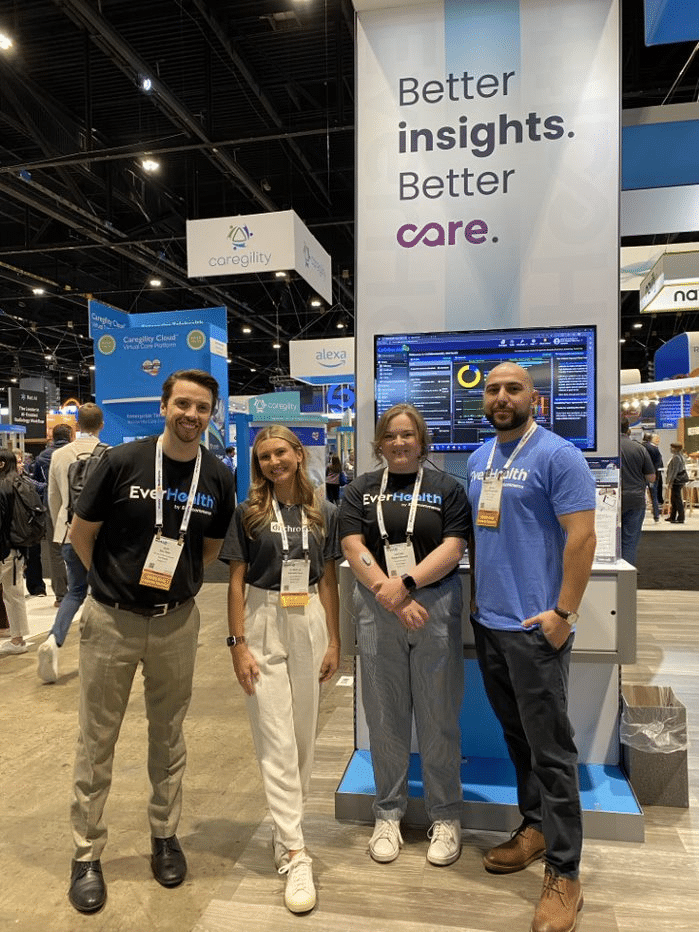
We just returned from the Healthcare Information and Management System Society (HIMSS) ...

Timely and efficient patient payments are essential to any business – and that includes...